Consult your bolt customization experts
To provide customers with products and services of quality safety supply chain security, and cost saving.
Contact Us Now
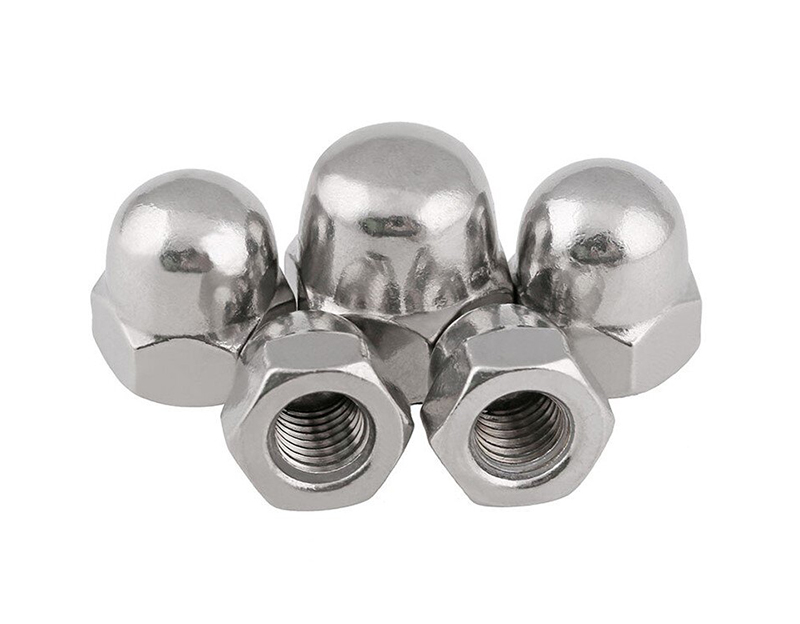
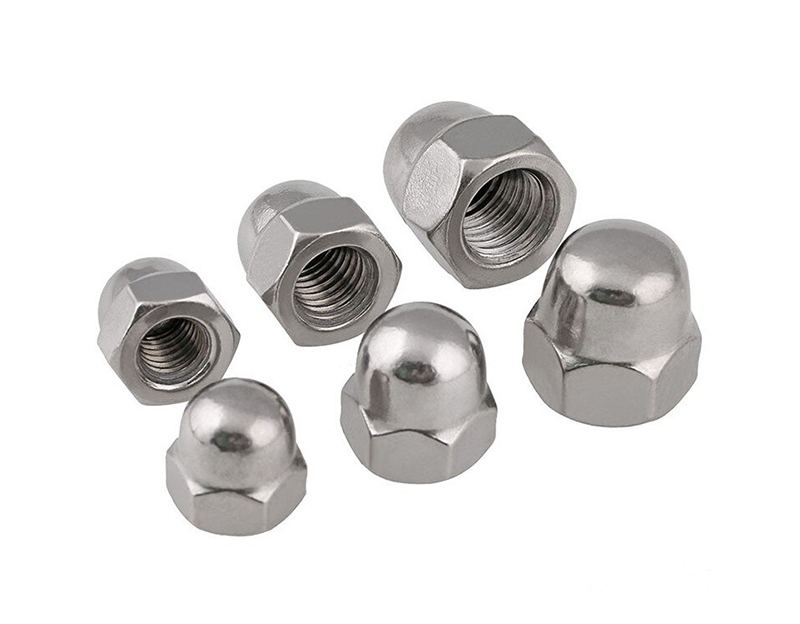

An acorn nut, also referred to as crown hex nut, din1587, cap nut, domed cap nut, or dome nut (UK), is a nut that has a domed end on one side. When used together with a threaded fastener with an external male thread, the domed end encloses the external thread, either to protect the thread or to protect nearby objects from contact with the thread. In addition, the dome gives a more finished appearance.
Standard
DIN1587
FOB Price: US $0.5 - 9,999 / Piece
Supply Ability: 10000 ton per Month
Surface treatment: Plain, Zinc Plated(ZP), GALVANIZED, HDG, Hot dip galvanized, Dacromet
Material: Carbon Steel / Alloy Steel / Stainless Steel / Brass / Copper
Standard: DIN / GB / UNC / BSW /JIS etc.
Certificate: ISO9001 ISO14001 ISO45001 SGS
Grade: 4.8 8.8 10.9 12.9 A2-70 A4-70 A4-80 etc.
What are they used for
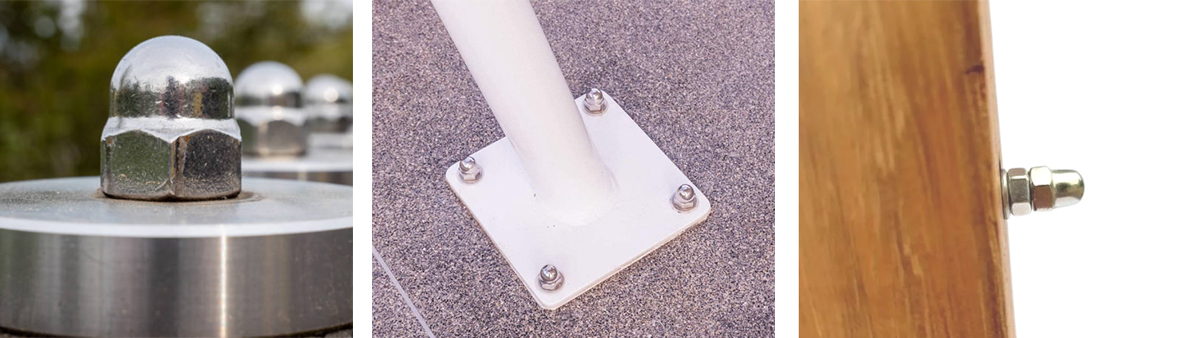
Hex cap nuts are commonly used in the fastener industry to secure bolts, screws or studs in place. These nuts are designed with a hexagonal-shaped top that allows for easy tightening and loosening using a wrench or pliers. The hex cap nut helps to prevent the bolt or screw from slipping or coming loose over time.
As a factory, our advantage is that we have state-of-the-art equipment and skilled workers to ensure the high quality of our hex cap nuts. We also have a wide range of materials, finishes and sizes to choose from, allowing us to meet the needs of our customers in various industries. Additionally, we have a strong focus on customer service and are committed to providing reliable delivery times and competitive pricing.
Manufacturing Process
The production process for hexagon flange nuts in the fastener industry typically involves the following steps:
1. Raw material selection: The first step is to carefully select the appropriate raw materials, such as high-quality steel or other alloys, that are suitable for the specific application and performance requirements of the nut.
2. Cutting and forming: The raw material is then cut into the appropriate size and shape using a variety of cutting and forming methods, such as forging or stamping. This process may require multiple steps to achieve the desired shape and dimensions.
3. Heat treatment: The newly formed nut is then heat-treated to a specific hardness or temper that is appropriate for the desired application.
4. Machining: Once the heat treatment is complete, the nut may undergo additional machining processes to refine the shape and dimensions, such as threading or chamfering the edges.
5. Inspection and testing: All nuts are thoroughly inspected and tested to ensure that they meet the required specifications and quality standards, such as strength and durability.
6. Packaging and shipping: Finally, the finished nuts are packaged and shipped to the customer, ready to be used in a wide range of industrial or construction applications.

Consult your bolt customization experts
To provide customers with products and services of quality safety supply chain security, and cost saving.
Contact Us Now